ReAI vs FreeAgent
A practical UK comparison between ReAI and FreeAgent.
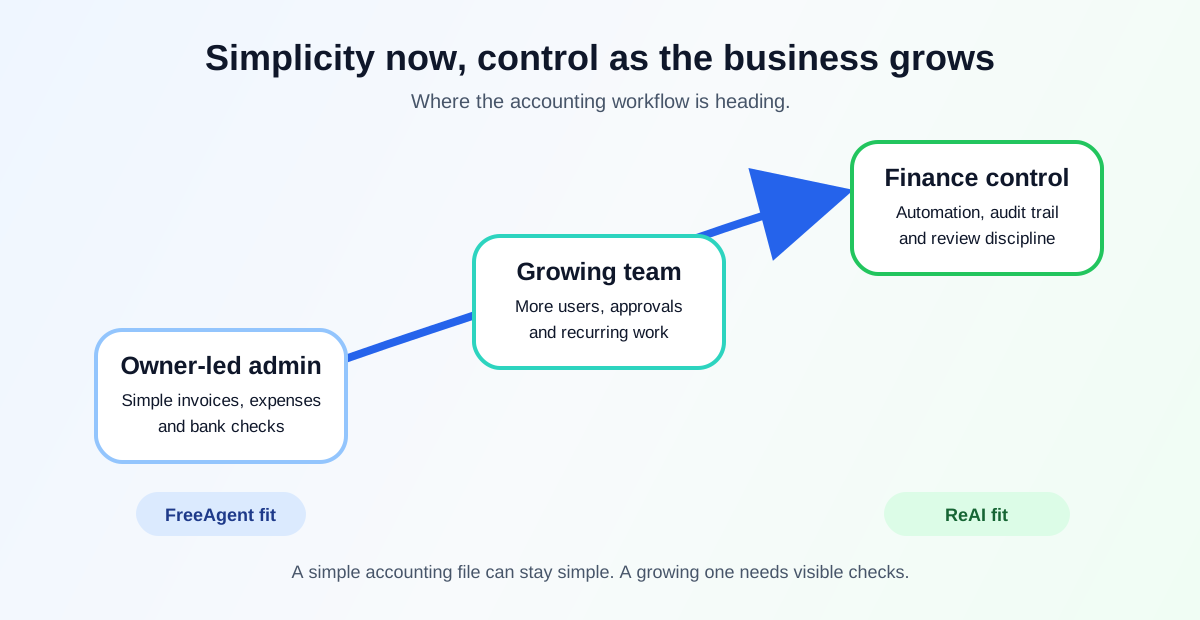
For UK owners comparing ReAI vs FreeAgent, the choice is often between simplicity today and process depth tomorrow. FreeAgent is often considered by freelancers, contractors and small owner-managed companies that want straightforward bookkeeping. ReAI is built for businesses that want deeper automation, stronger controls and a finance workflow that can grow with the company.
That does not make one tool universally better. It means the right choice depends on how much complexity your accounting process already has, and how much it is likely to gain over the next year.
Quick comparison
| Area | ReAI | FreeAgent |
|---|---|---|
| Best for | Growing UK businesses that need automation, controls and review points | Freelancers, contractors and smaller owner-managed businesses |
| Core orientation | Finance-team workflow and control | Owner-managed simplicity |
| Automation depth | AI-assisted posting, checks and process automation | Streamlined bookkeeping and invoicing |
| Scaling approach | Built for expanding process complexity | Best where the accounting file stays relatively simple |
| Key question | Will the business need stronger controls soon? | Is the main need a simple owner-led admin routine? |
Where FreeAgent fits well
FreeAgent can be attractive when the accounting process is simple: one owner, one business bank account, clear income streams and limited approval complexity. In that situation, the most valuable feature is often speed. The owner wants invoices out, expenses recorded, tax estimates visible and the accountant able to review without too much friction.
That kind of setup can work well for a consultant, contractor or small limited company with predictable records. It becomes harder when several people raise invoices, expenses need approval, bank feeds include many mixed transactions, or the director wants management reports that are ready without a clean-up round.
Where ReAI becomes stronger
ReAI is designed for the moment when bookkeeping becomes a process rather than a personal admin habit. The practical difference is visible in the checks:
| Growing need | Why it changes the software decision |
|---|---|
| More transactions | Manual coding and reconciliation take more time each month |
| More people | Permissions, approvals and clear responsibility matter more |
| More reporting | Management accounts need consistent coding, not last-minute tidying |
| More tax-sensitive work | VAT codes, evidence and review notes need to be easier to trace |
| More integrations | Imports need controls so sales, bank and expense data stay aligned |
For related routines, use bookkeeping quality checks , bank reconciliation for UK accounting and recurring invoice review .
Example: contractor vs growing agency
A contractor billing a few clients each month may value FreeAgent’s simplicity. The workflow is easy to keep in the owner’s head: raise invoices, import bank lines, record expenses and send the records to the accountant.
A growing agency has a different shape. It may have recurring retainers, ad spend, subscriptions, contractors, director expenses, VAT review and a bookkeeper working weekly. At that point, the owner should not be the only person who understands the accounting file. ReAI is better suited to that operating model because it gives the team a clearer review queue and a more controlled route from transaction to report.
If imports are part of the workflow, the CSV bank import workflow guide shows how to keep data movement controlled.
Best fit
Choose ReAI if your finance process needs stronger controls, deeper automation and room to grow. It is the better fit when several people touch the accounts, month-end takes too long, or the accountant spends too much time fixing issues that could have been caught earlier.
Choose FreeAgent if ease of use for owner-managed operations is the main goal and the accounting file is likely to stay simple. A straightforward business should not buy complexity it does not need.
Questions before switching
Before moving from FreeAgent to ReAI, check:
- Which clients, suppliers, recurring invoices and open balances need to move?
- Which bank accounts and payment feeds should connect on day one?
- Which expense categories, VAT treatments and notes must be preserved?
- Which users need access now, and which access levels will be needed later?
- Which accountant review steps should be built into the new routine?
Use data checks before switching accounting system before importing balances or historic transactions.
Next step
Compare ReAI vs Xero if ecosystem breadth matters, or ReAI vs QuickBooks if you want another UK small-business accounting comparison.