Year-end close course
Learn a structured year-end close process for UK accounting teams, from reconciliations to filing-ready evidence.
This year-end close course gives UK finance teams a structured way to turn day-to-day bookkeeping into accounts-ready evidence. It is designed for directors, bookkeepers and finance assistants who want a repeatable close routine before the accountant, tax adviser or auditor starts asking for supporting schedules.
Use it alongside the detailed year-end close checklist when you need a fuller list of checks.
Who this course is for
This course is useful if:
- The year-end file depends on too many spreadsheet exports.
- Bank, sales ledger or purchase ledger balances are not reconciled before the accountant starts.
- Accruals, prepayments and fixed assets are reviewed late.
- Directors approve accounts without a clear evidence pack.
- Filing readiness depends on one person remembering what happened.
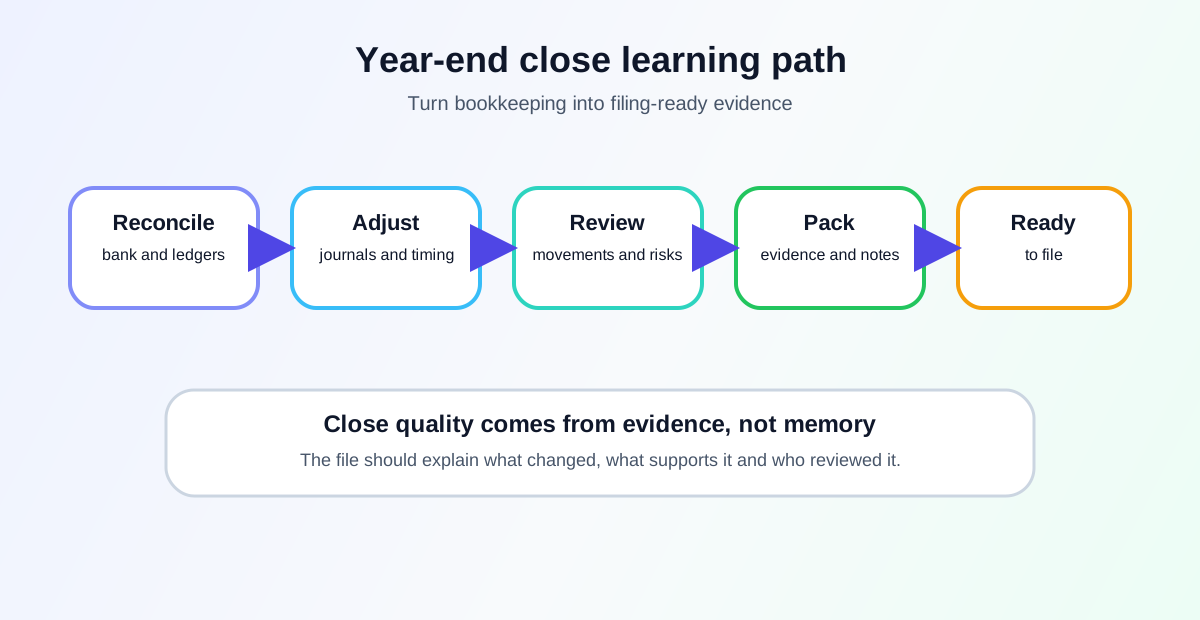
Course path
| Module | What you learn | Output |
|---|---|---|
| 1. Close calendar | How to sequence bank, ledger and review work | A realistic close timetable |
| 2. Reconciliations | Bank, debtors, creditors, VAT, payroll and control accounts | A signed-off reconciliation list |
| 3. Adjustments | Accruals, prepayments, depreciation and year-end journals | A controlled adjustment log |
| 4. Review evidence | Explanations for unusual movements and open questions | A cleaner accounts production data pack |
| 5. Filing readiness | Director review, Companies House preparation and tax handover | A filing-ready year-end file |
Practical exercise
Pick one completed accounting period and rehearse the year-end close on a smaller scale:
- Reconcile the bank and identify unmatched items.
- Compare sales ledger and purchase ledger balances to supporting lists.
- Find one accrual, one prepayment and one fixed asset question.
- Write a short explanation for any large movement against the previous period.
- Save the evidence where someone else can review it later.
If this is difficult for one month, it will be painful for a full year. The course helps you turn that exercise into a repeatable routine.
Common mistakes to fix
The most common mistake is leaving the close until after year end. A strong year-end file is built during the year through monthly review, clear notes and consistent reconciliations.
Watch especially for:
- Old suspense balances with no owner.
- Bank transactions posted without supporting evidence.
- Payroll, VAT or loan balances that do not agree to external records.
- Fixed assets expensed incorrectly or missing from the register.
- Director approvals given before open questions are resolved.
For supporting detail, use pre-year-end balance sheet review , post-year-end adjusting journals and key filing deadlines for UK businesses .
Outcome
By the end of the course, you should have a clear close checklist that reduces late adjustments and improves reporting confidence. The practical outcome is a year-end file that answers the accountant’s first questions before they are asked: what changed, what supports the balance and who reviewed it?
For the next step, read filing accounts with Companies House and directors approval before Companies House filing .